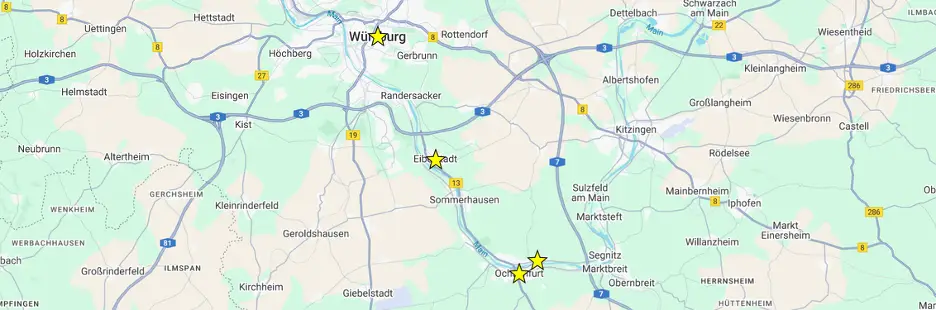
Our next stop was Würzburg and the neighboring towns of Eibelstadt, Frickenhausen, and Ochsenfurt. Petra was born in Würzburg and raised in Eibelstadt. Her grandparents lived in Frickenhausen, and our friends (with whom we’d be staying) live in Ochsenfurt. These towns are located in the ‘Landkreis Würzburg’, or the Würzburg District. This area is located in the Franconia wine region of Bavaria, which was evident with vineyards just about everywhere we looked.
Frickenhausen am Main
We first drove to Ochsenfurt to meet up with our friends, Christian, Nikole, and their two kids, Luca and Lian (who are about Andy’s age). We then drove across the river to Frickenhausen to see where her grandparents lived. Frickenhausen’s full name is Frickenhausen am Main, as it sits right on the banks of the Main River (pronounced “Mine”). Apparently even Frankfurt, which sits on the Main River, is called ‘Frankfurt am Main’. I’m guessing “am” means “on the” or something to that effect. Frickenhausen am Main is one of the oldest towns in the region, surrounded by its historical original Gothic city ‘ring wall’ and various defensive towers along the wall. The visit to Frickenhausen was emotional for Petra, seeing her grandfather’s old house, and then visiting his grave at the local cemetery. One of the more touching moments was when we went to visit Petra’s grandfather’s grave – it wasn’t marked, so it was a bit of a wild goose chase to find it. We spoke to the cemetery care taker who showed us the location and even spoke about her grandpa and relatives. It was an emotional moment, but necessary.
The buildings in Frickenhausen were very picturesque, like something off of a postcard. We walked through the town a bit, down to the Main River. We walked through one of the ring wall gates and noticed markings on the archway of the gate that indicated flood levels and the respective years – dating back to the 1800s!
Eibelstadt
Petra’s home town of Eibelstadt was right up the road on the way to Würzburg. You could also say it’s ‘right up the river’, as it also sits on the Main River. Our initial visit was relatively short – of course, it’s a small town, and there was only so much to see, considering Petra moved away when she was 12. But we were able to see where she lived, her school, and old stomping grounds.
We revisited Eibelstadt later with friends to enjoy the annual Weinfest celebration. Weinfest is akin to…Oktoberfest, but – with wine! It is put on in the town’s center, with food vendors, a stage with bands playing, picnic-style tables lined up in support of the communal style celebration (again, like Oktoberfest).
Würzburg
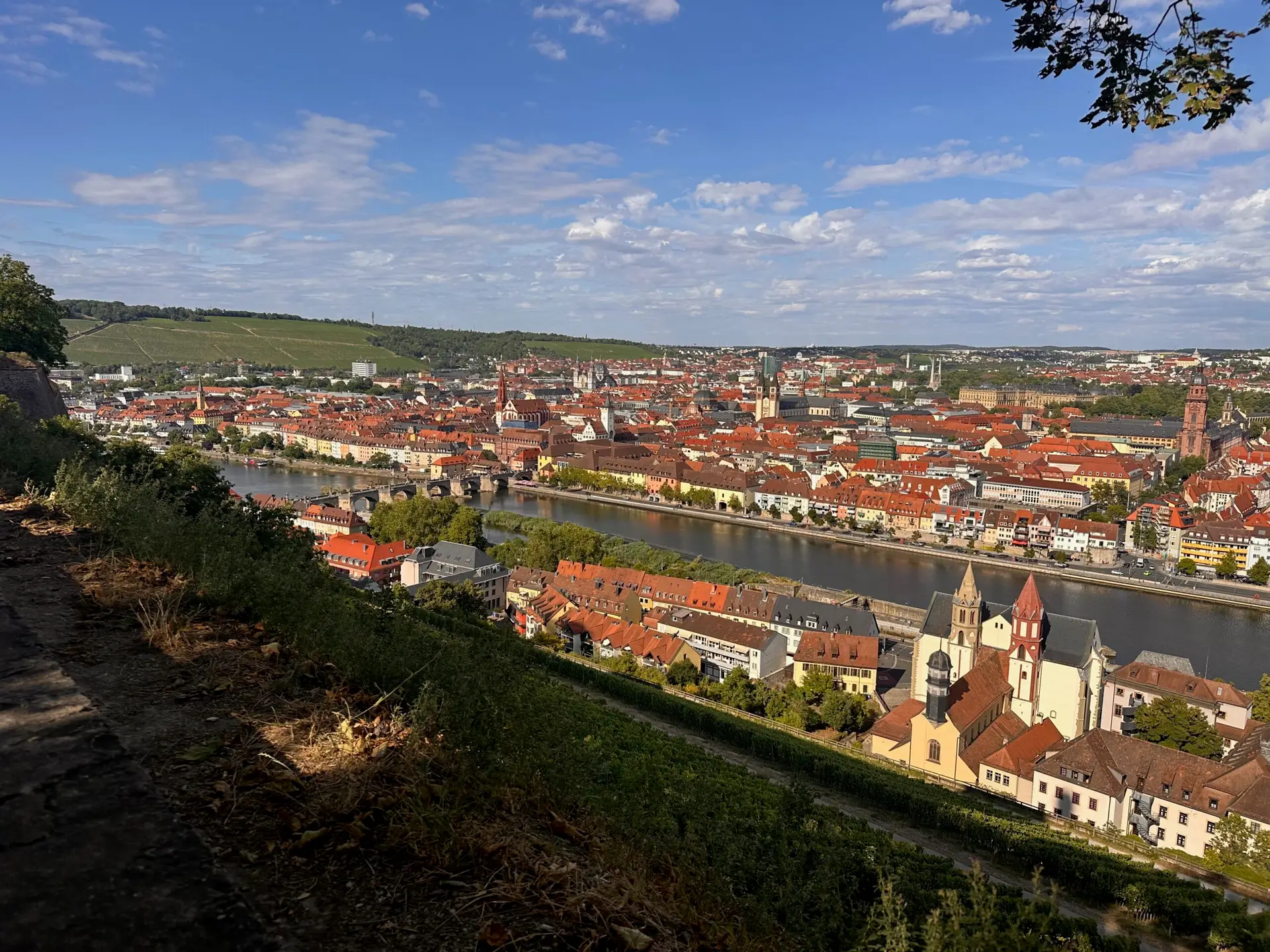
We went to Würzburg with a loose agenda of things to see and do. This included the Würzburg Residence, the Main Bridge, the Marienberg Fortress, and the Kiliani festival (an annual celebration for Saint Kilian, the patron saint of the city of Würzburg).
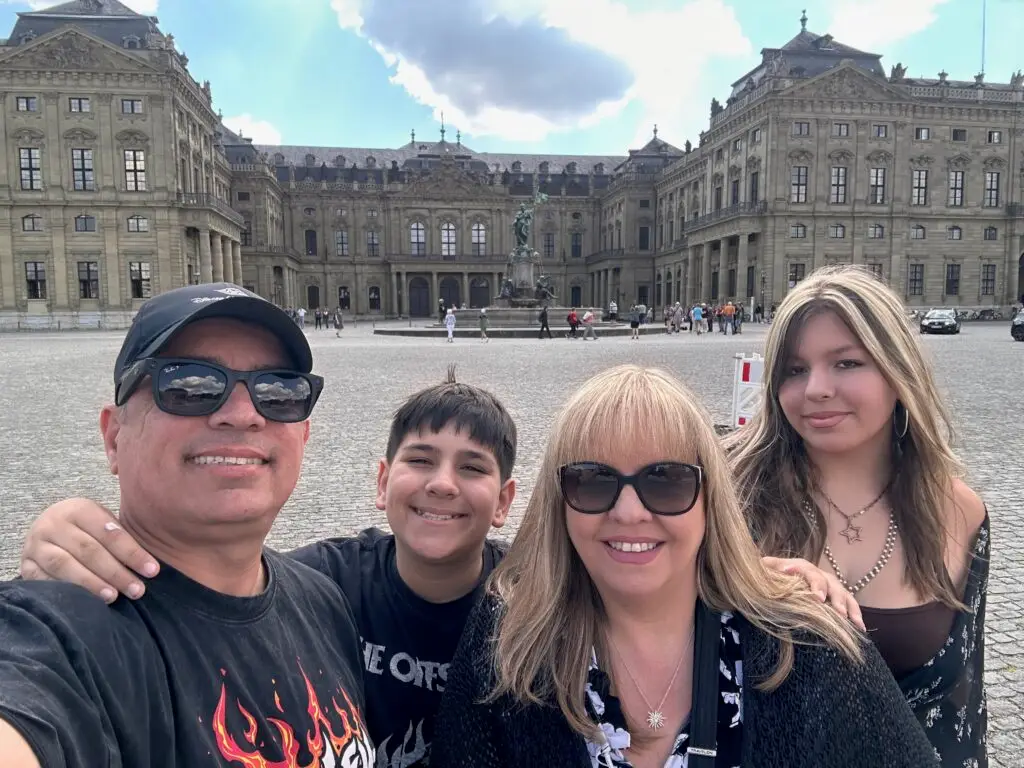
The Würzburg Residence
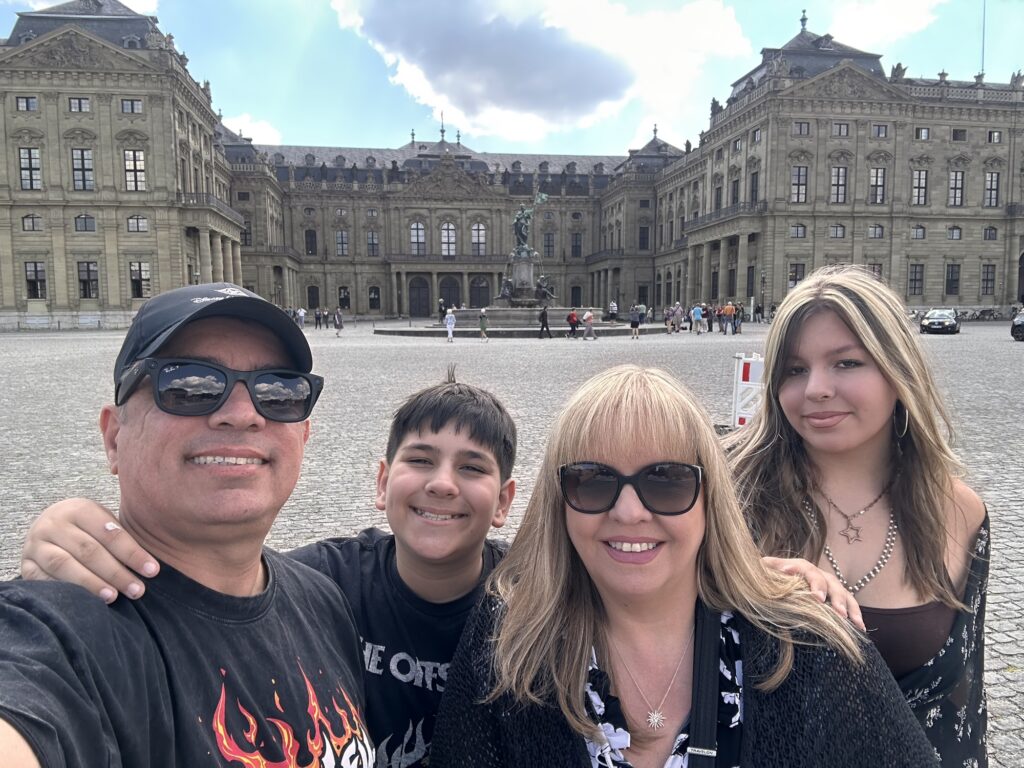
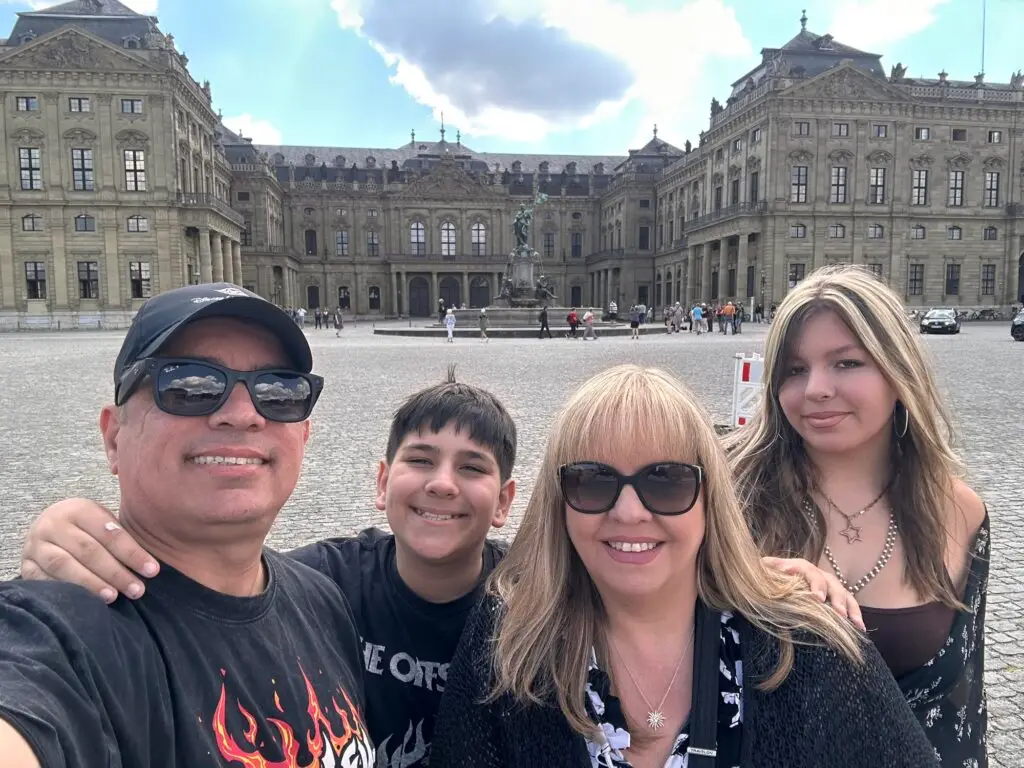
The Würzburg Residence is a baroque-style palace that was built in the 1700’s for the last of the prince-bishops. The prince-bishops were leaders selected by the Holy Roman Empire who had the combined powers of a religious bishop as well as a traditional prince.
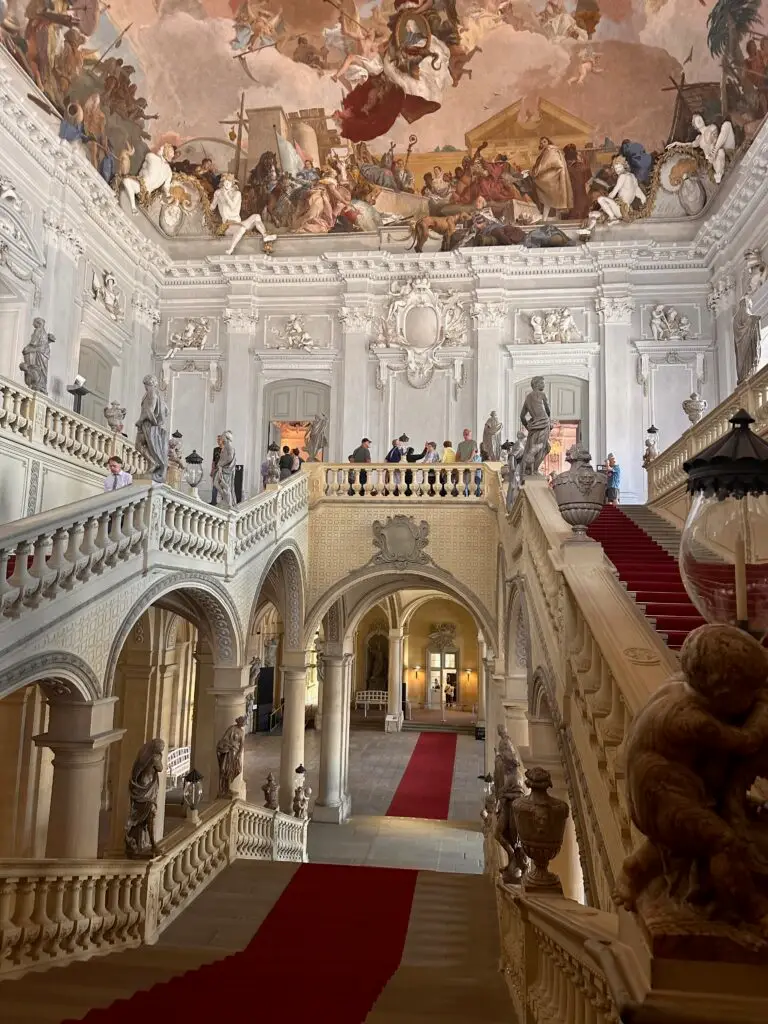
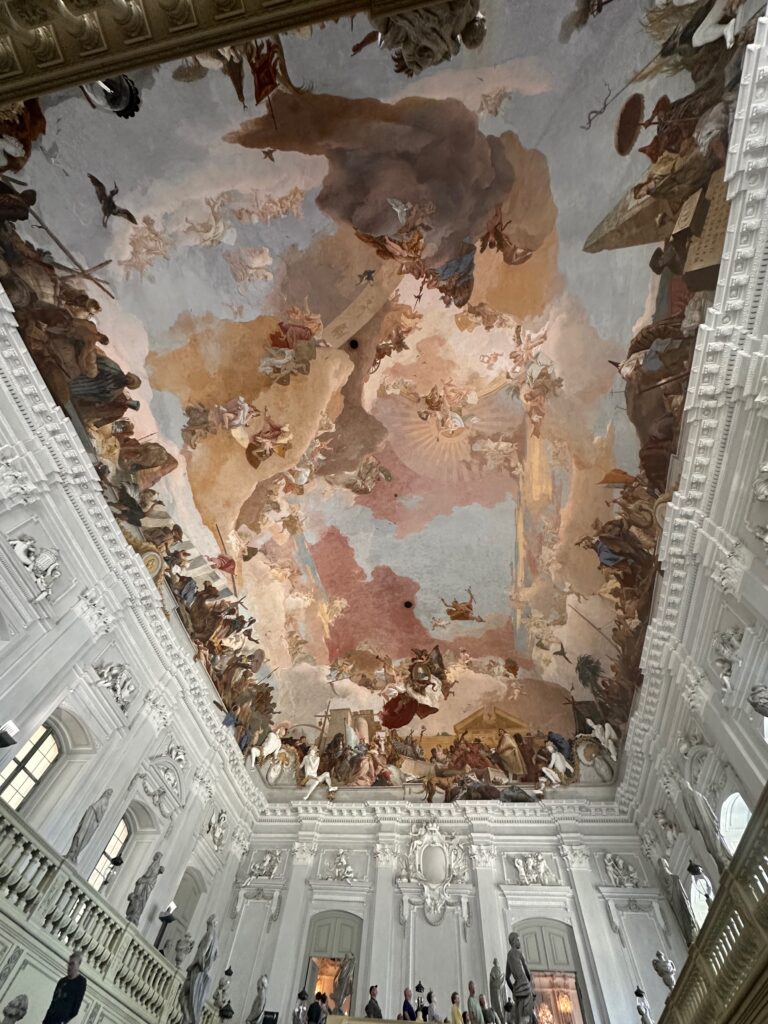
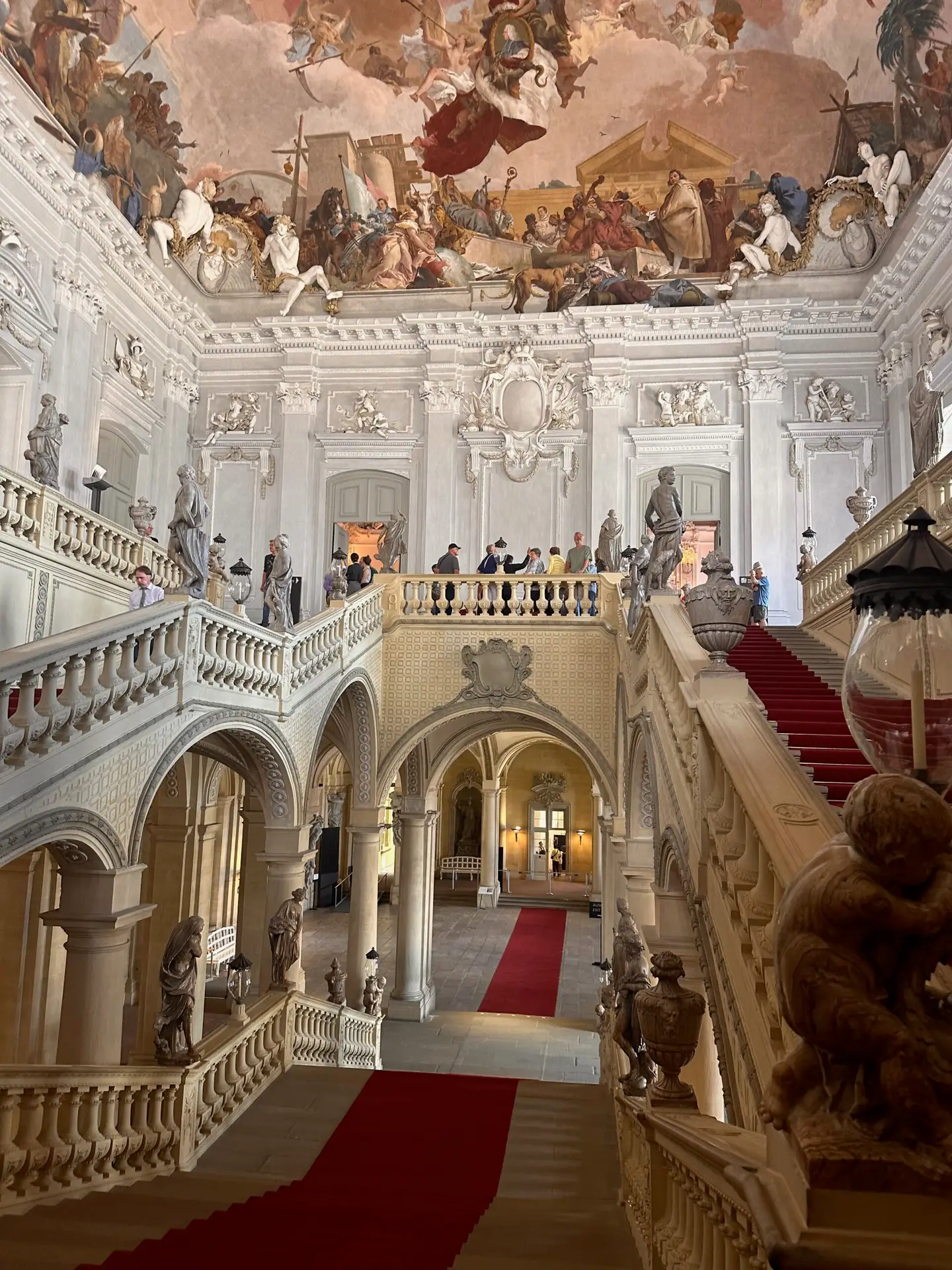
The Residence is full of amazing and historical artwork, including the largest ceiling fresco in the world (Apollo and the Four Continents). This piece adorns the ceiling above the staircase as you enter the Residence and ascend to the 2nd floor. What was particularly interesting about this was the way they added 3 dimensional features to the fresco (such as feet dangling down).
The damage of WWII
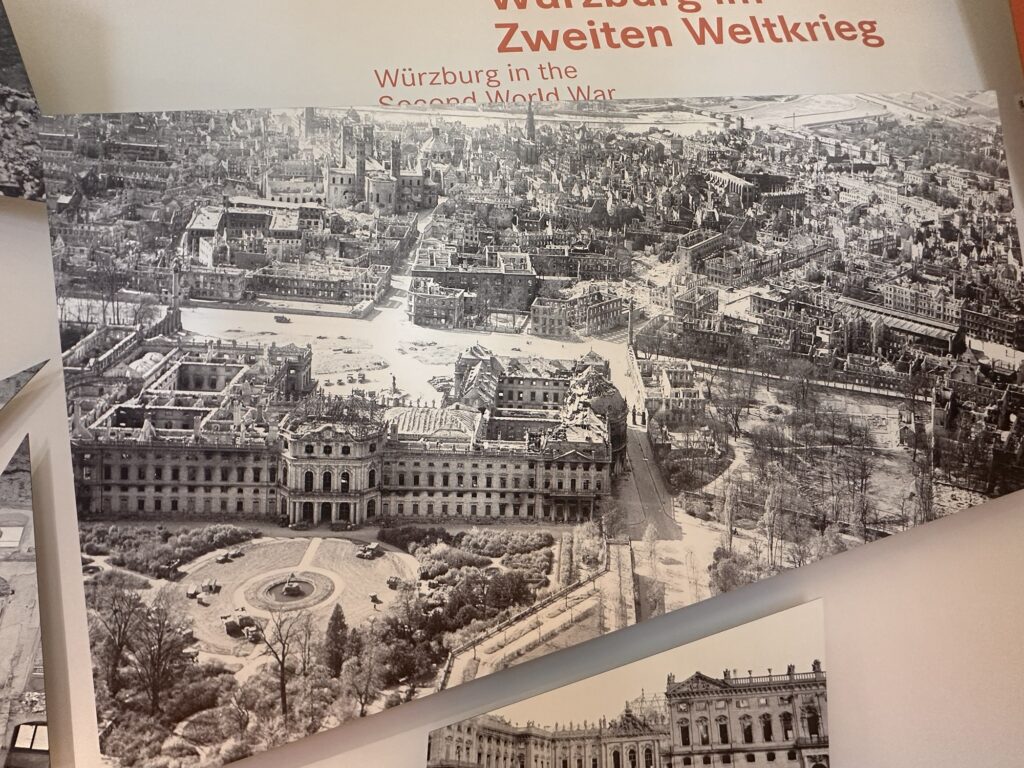
TBD
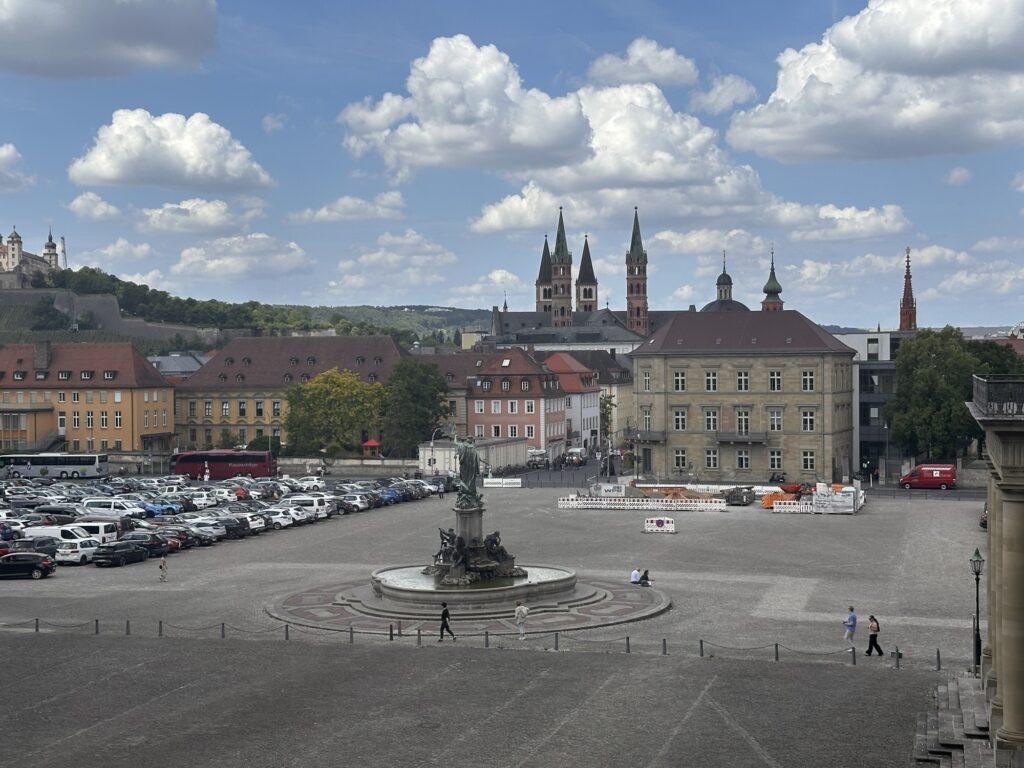
St. Killian – the Patron Saint of Würzburg
A prominent name you’ll hear when visiting Würzburg is Saint Killian. St. Killian Was an irish missionary who traveled with others from Ireland to Rome to see the Pope. The Pope assigned him as a missionary to the Franconian area, and Killian chose Würzburg for his base of operations. While there he converted the residing duke and his constituents to Christianity, but failed to convert the duke’s wife. With the conversion to Christianity, Killian told the duke his marriage wasn’t legit. The wife wasn’t too keen on this, and had Killian and his pals beheaded while the duke was away. According to history, this event became his martyrdom (him and his pals). The location of the martyrdom (if I’m saying that right) became a pilgrimage destination and eventually the Würzburg Cathedral (St. Kilian’s Cathedral) was built on that site. Statues of the three saints can be seen on the Würzburg Saints’ Bridge, also known more formally as the Alte Mainbrücke, or the Old Main Bridge.
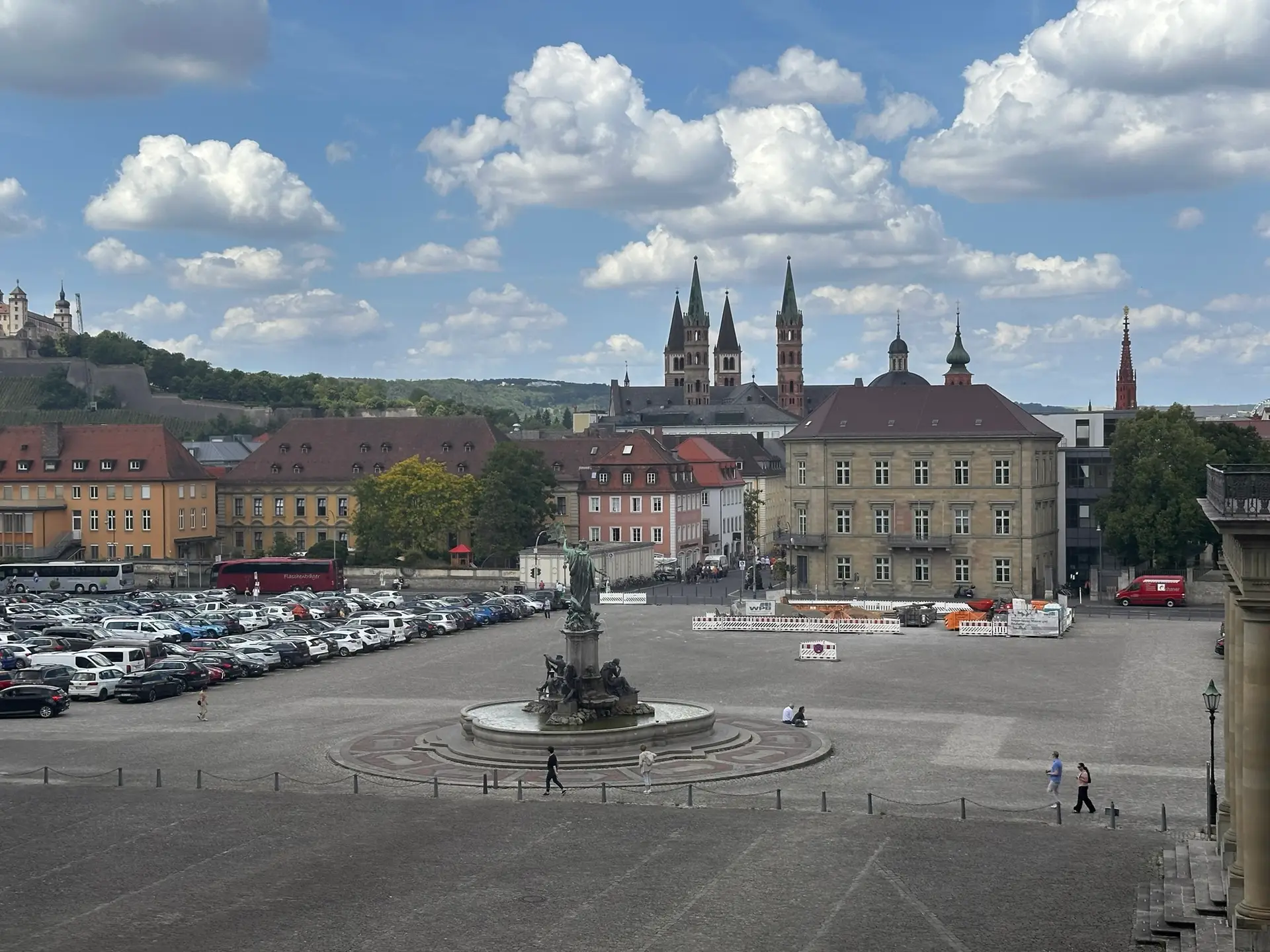
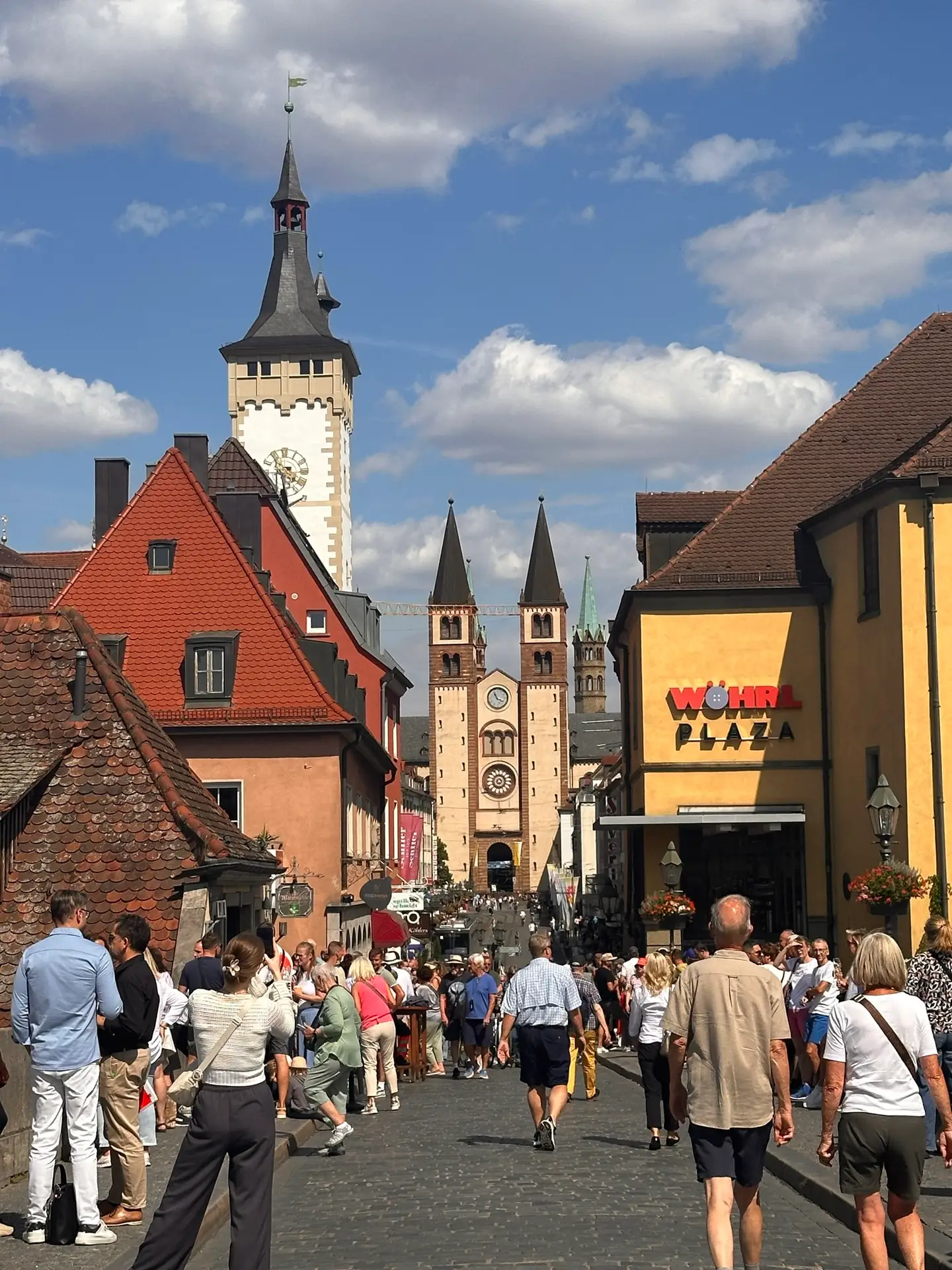
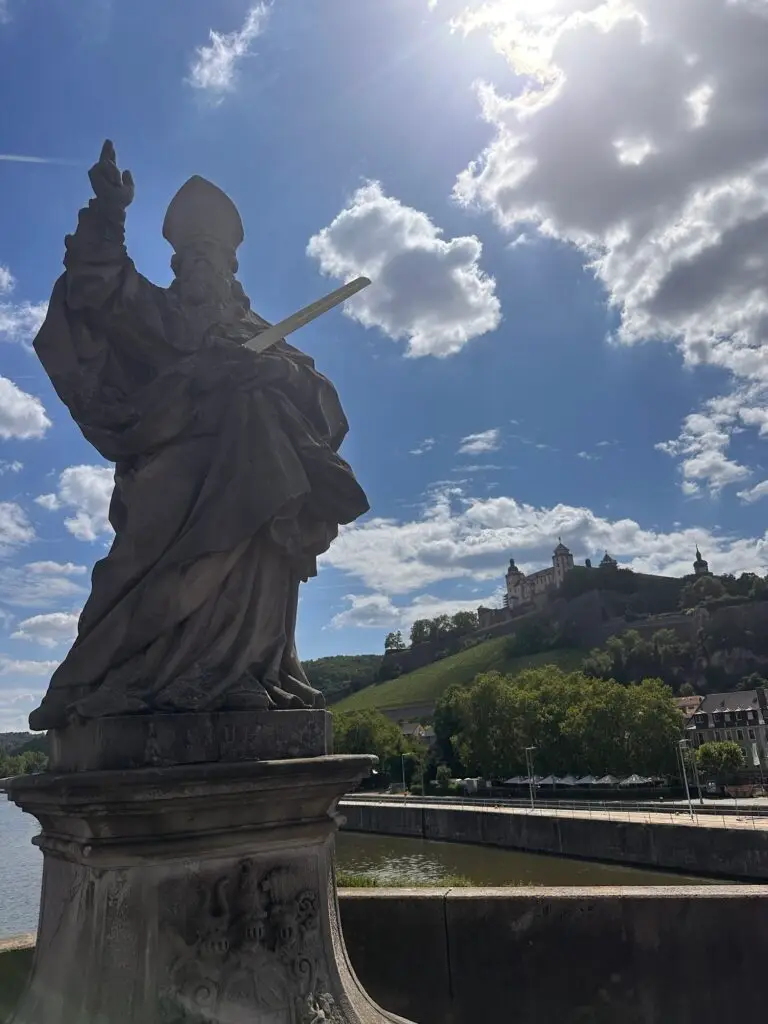
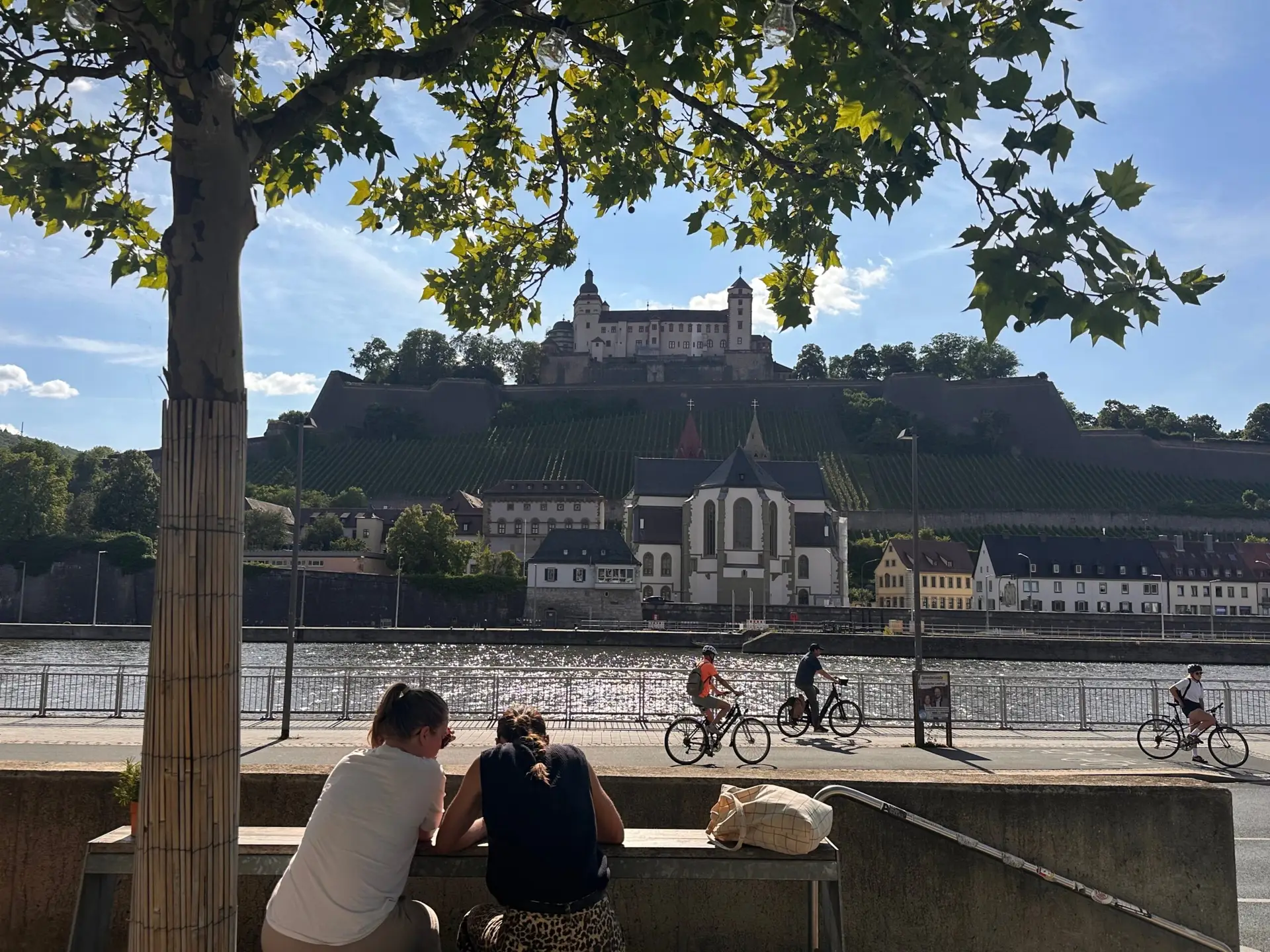

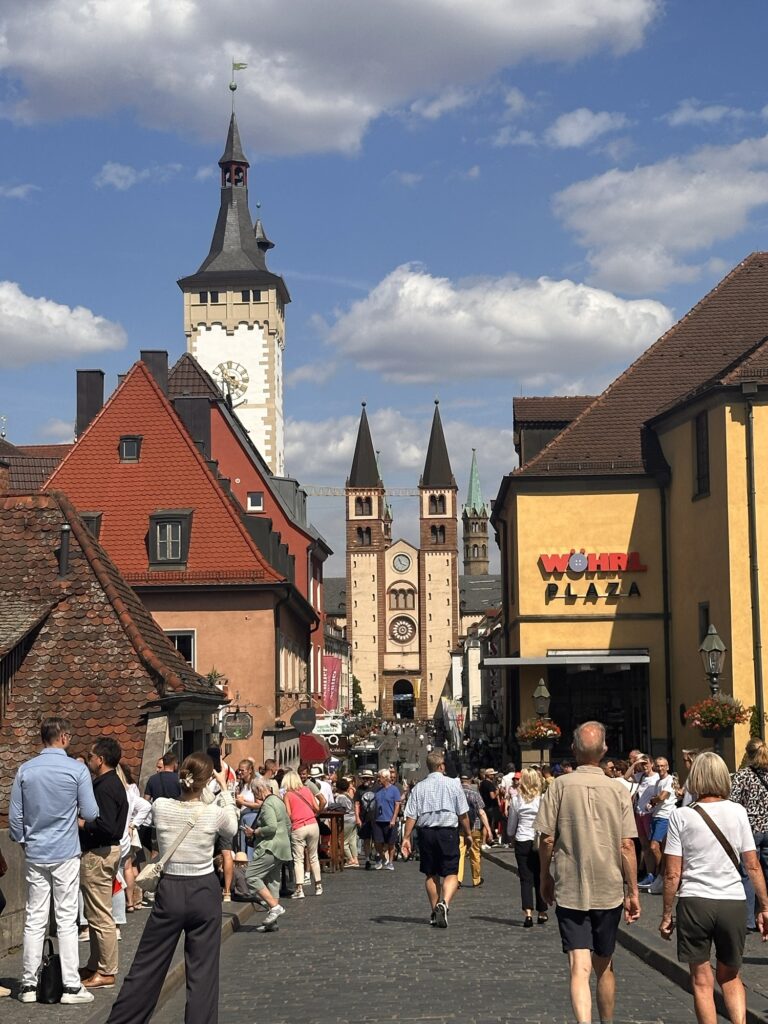
We made our way west from The Residence to the Alte Mainbrücke, or Old Main Bridge
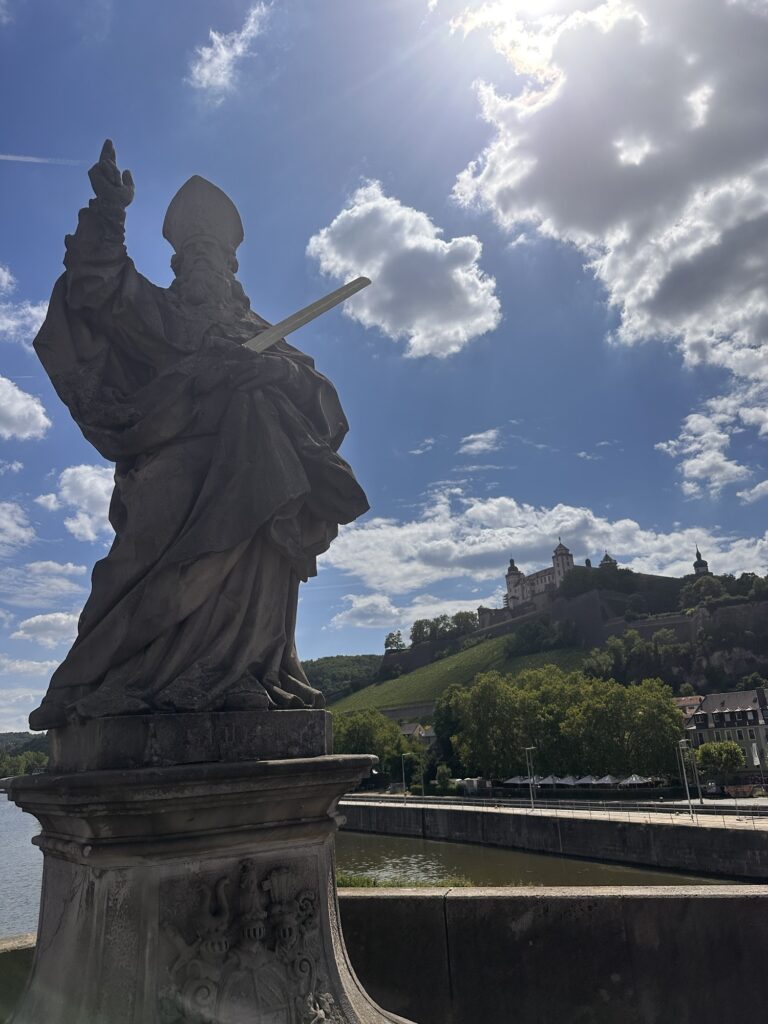
TBD
Marienberg Fortress
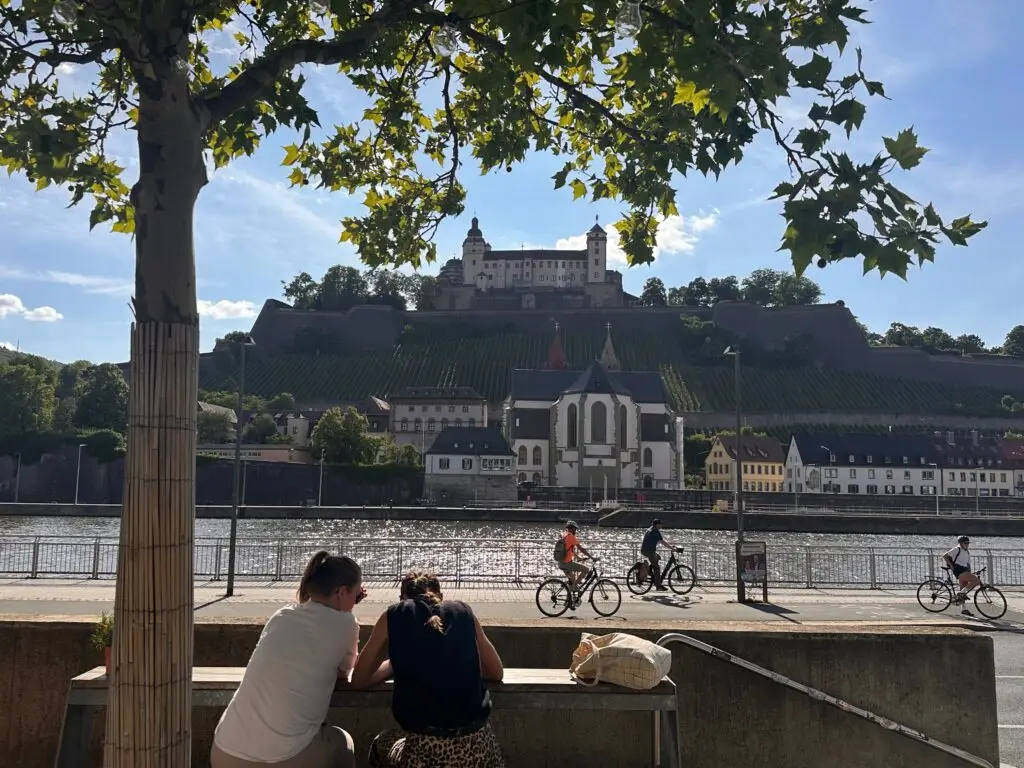
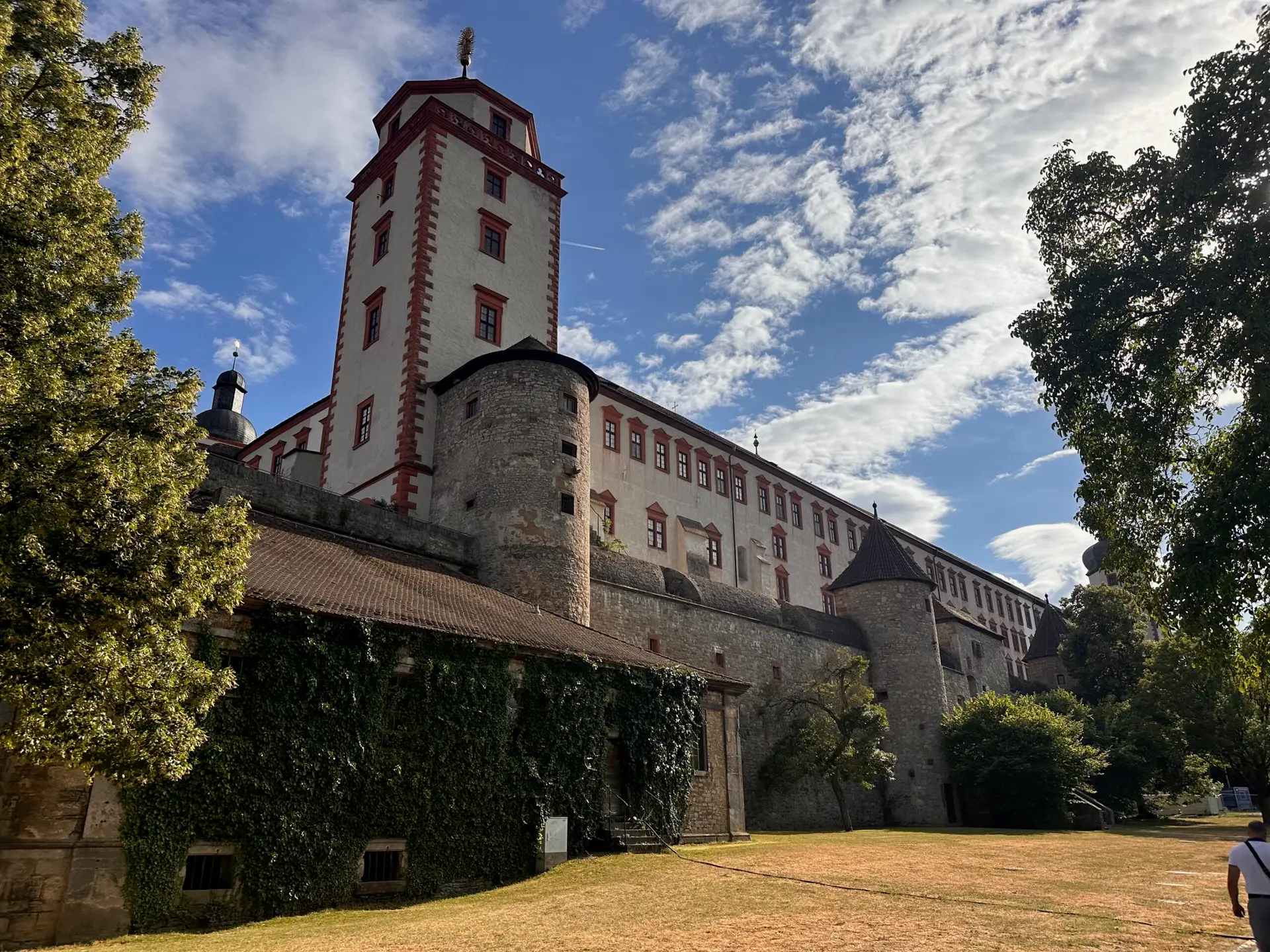
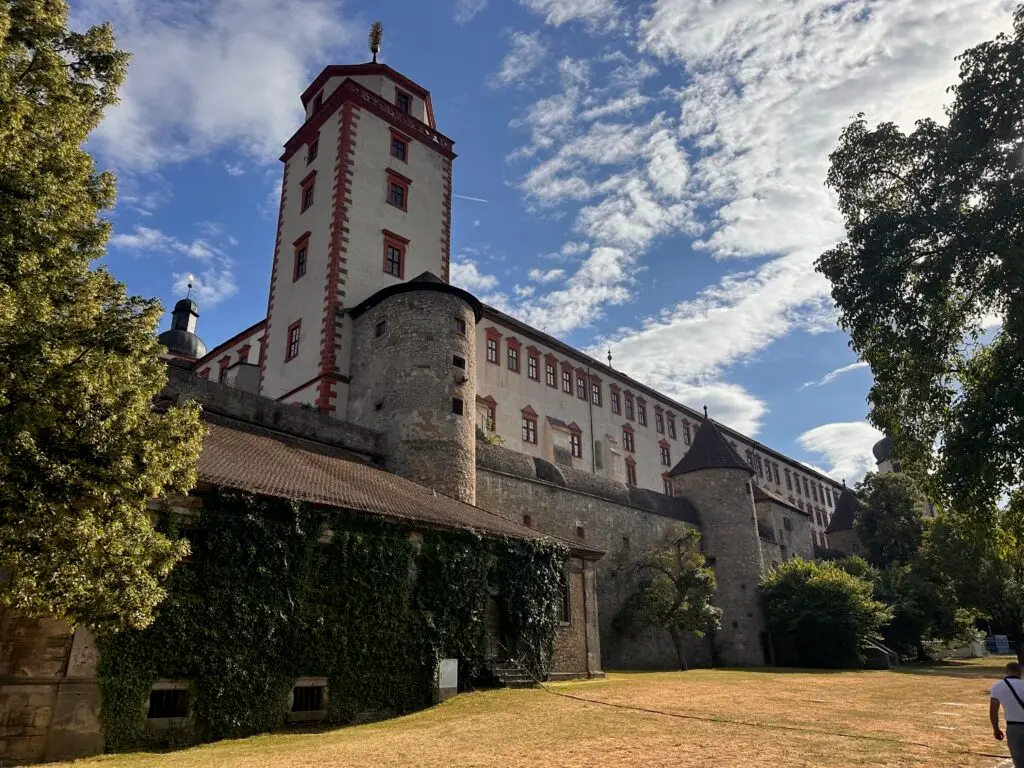
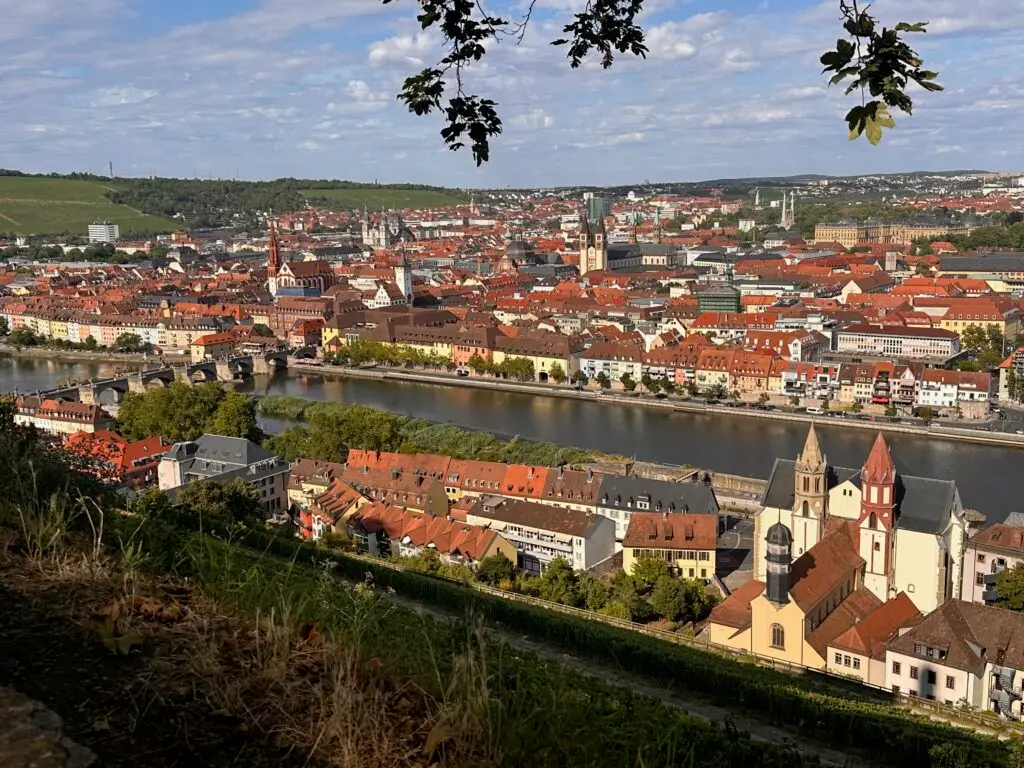
Sitting on top of the Marienberg hill on the western bank of the Main River, facing the city of Wurzburg, sits the Marienberg Fortress. This Baroque-style Fortress has a vast history dating back to 1000 BC, serving a diverse group of people. Earliest records show tribes from the Bronze Age occupied the fortress, which traded hands from one tribe to another until the Franks eventually took it over in the 6th century. Some of the more recent tenants were the prince-bishops, who resided there from about 1200 to the 1700’s when the Wurzburg Residence was established.
Kiliani Volksfest
