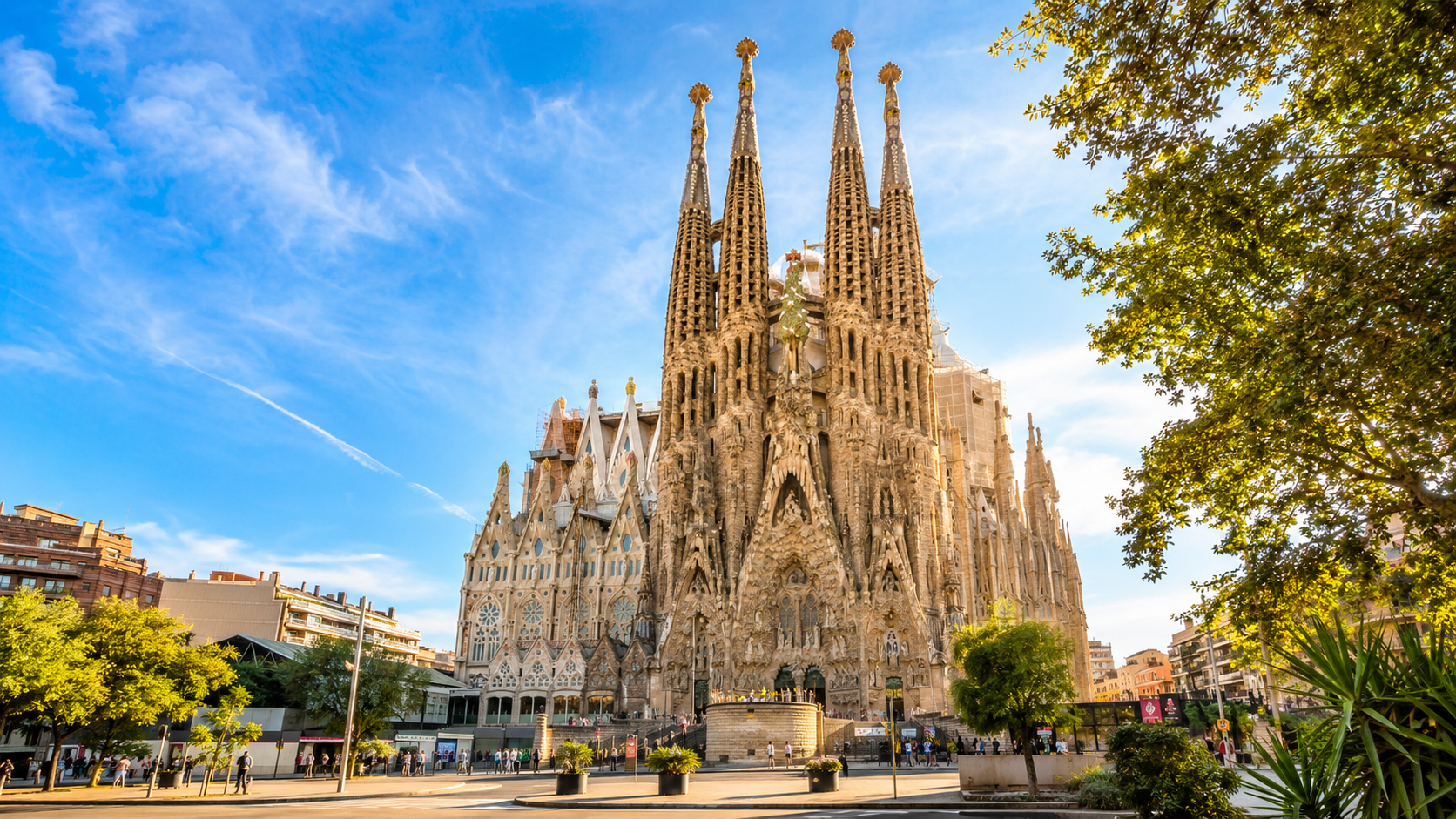
Getting settled in and visiting the iconic landmark Basílica de la Sagrada Família
First things first – there are a few key points to understand (which we learned in hindsight) which help in understanding the historical landmarks and features we saw.
- The city of Barcelona resides in the Catalonia region of Spain and has two official languages: Catalan and Spanish (Castilian). A significant part of Barcelona’s population consider themselves Catalans (not Spanish) and therefore speak Catalna instead of Spanish (which was a surprise to us).
- Montjuïc. Montjuïc is a broad hill overlooking both the Mediterranean Sea and the city of Barcelona. At the top of the hill stands Montjuïc Castle, a fortress whose origins date to the 1600s. Montjuïc is a place that seems to bring many different parts of the city’s history together.
- The famous Catalan architect Antoni Gaudí, who designed unique buildings using tile mosaics, which can be found all over Barcelona, including Casa Batlló, La Pedrera, Park Güell, and his most famous project, the Basílica de la Sagrada Família.
The Basílica de la Sagrada Família
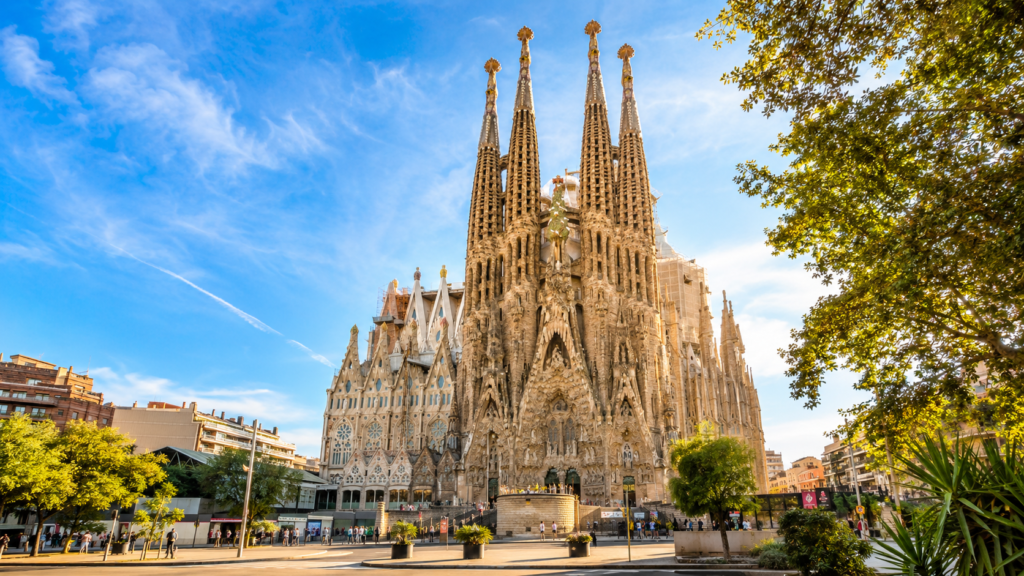
There are certain landmarks that seem to define the cities they reside in; the Eiffel Tower in Paris, Big Ben in London, the Colosseum in Rome. For Barcelona, that landmark is the Basílica de la Sagrada Família.
Rising dramatically above the city, the Sagrada Família is far more than an elaborate church. It is the life’s work of Antoni Gaudí (the famous Catalan architect mentioned above) and one of the most distinctive buildings in the world. Construction began in 1882, and Gaudí spent decades transforming what had originally been conceived as a conventional church into something unlike anything that had come before it.
Gaudí apparently drew much of his inspiration from nature; stone columns branch outward like trees supporting a forest canopy. Spiraling towers rise organically toward the sky. Animals, plants, fruit, biblical figures and geometric patterns are woven throughout the building, making the basilica feel almost as if it has grown from the ground rather than been constructed upon it.
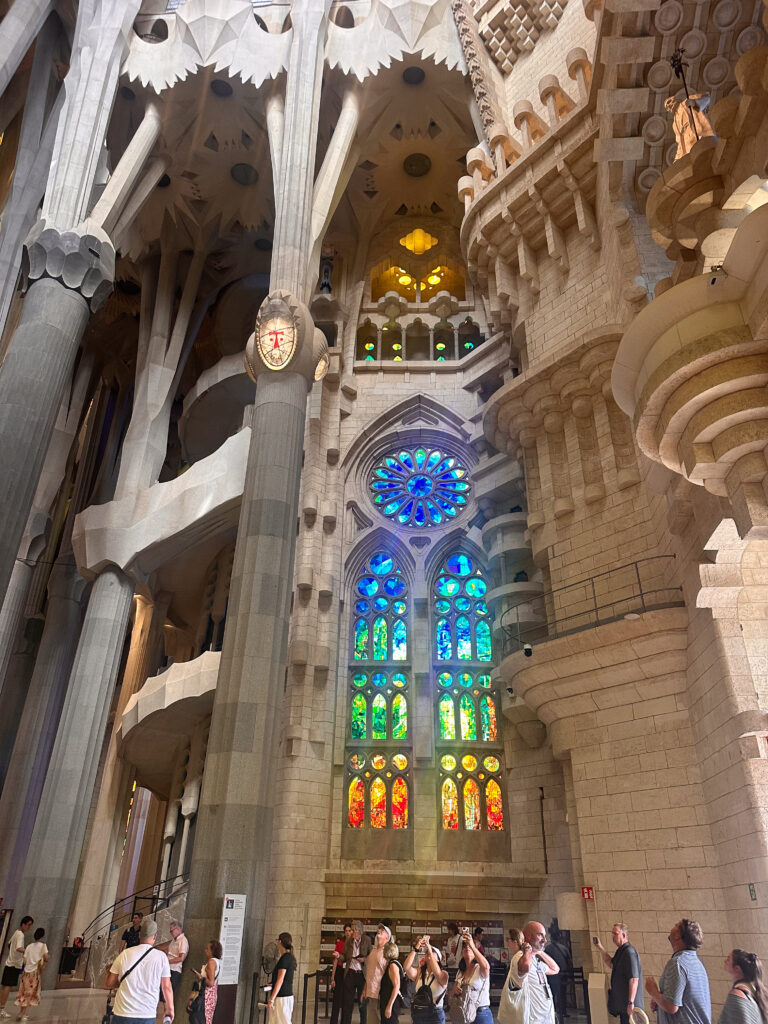
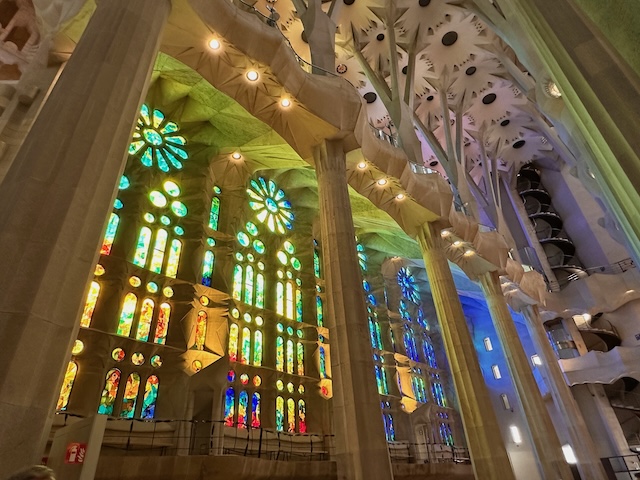
Gaudí designed the central nave to resemble a great forest. Massive columns stretch upward and divide into branches high above the floor, while sunlight pours through enormous stained-glass windows. Depending on where you stand and the time of day, the interior can glow in brilliant shades of red, orange, blue and green. It is part cathedral, part sculpture and part engineering marvel.
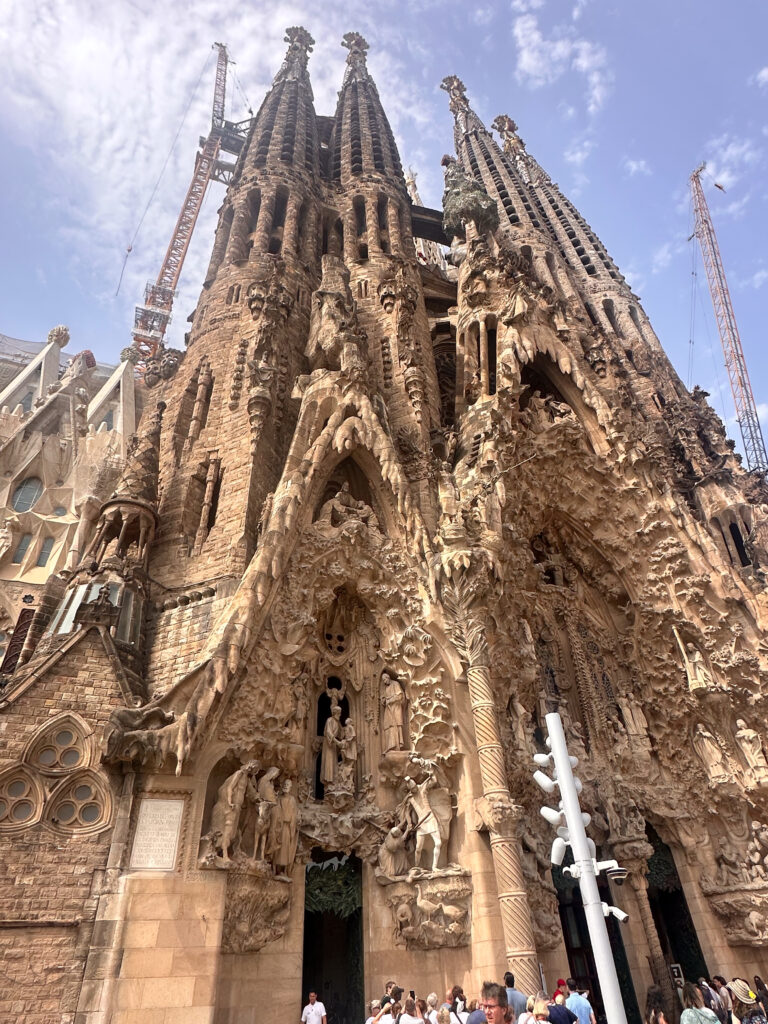
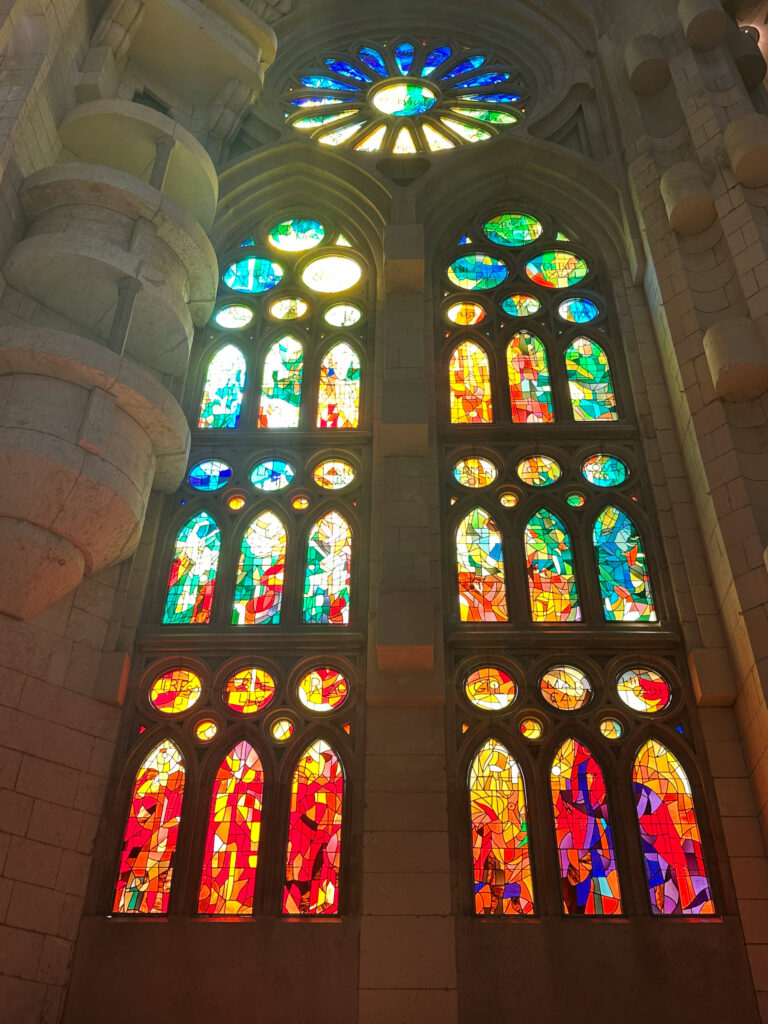
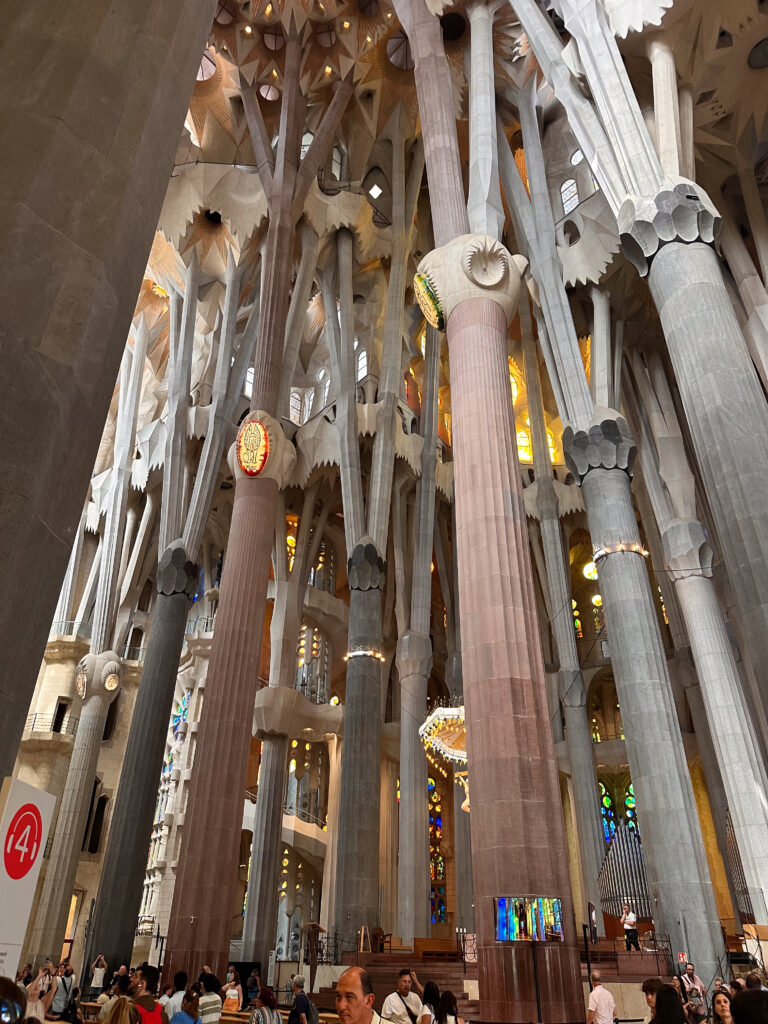
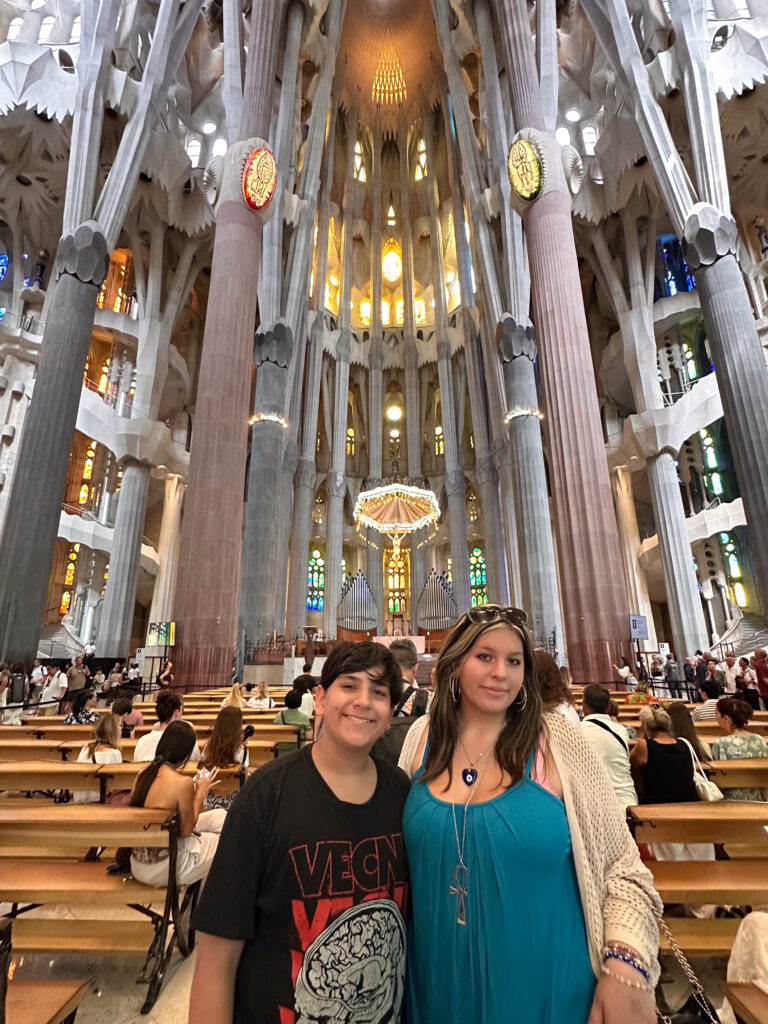
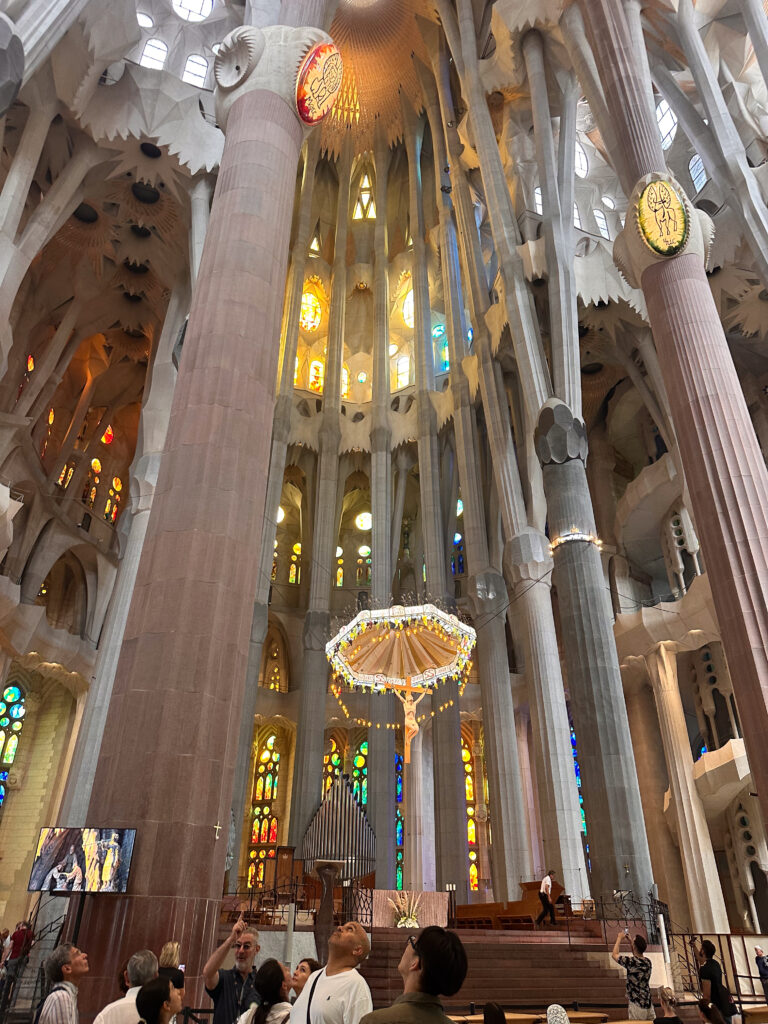
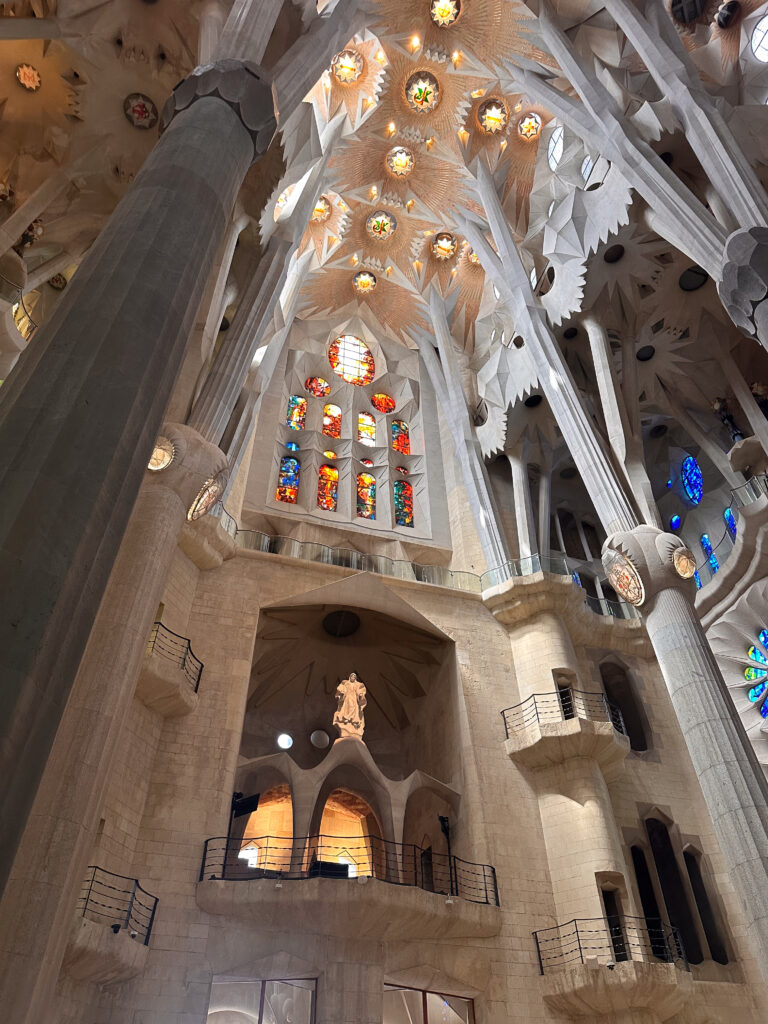
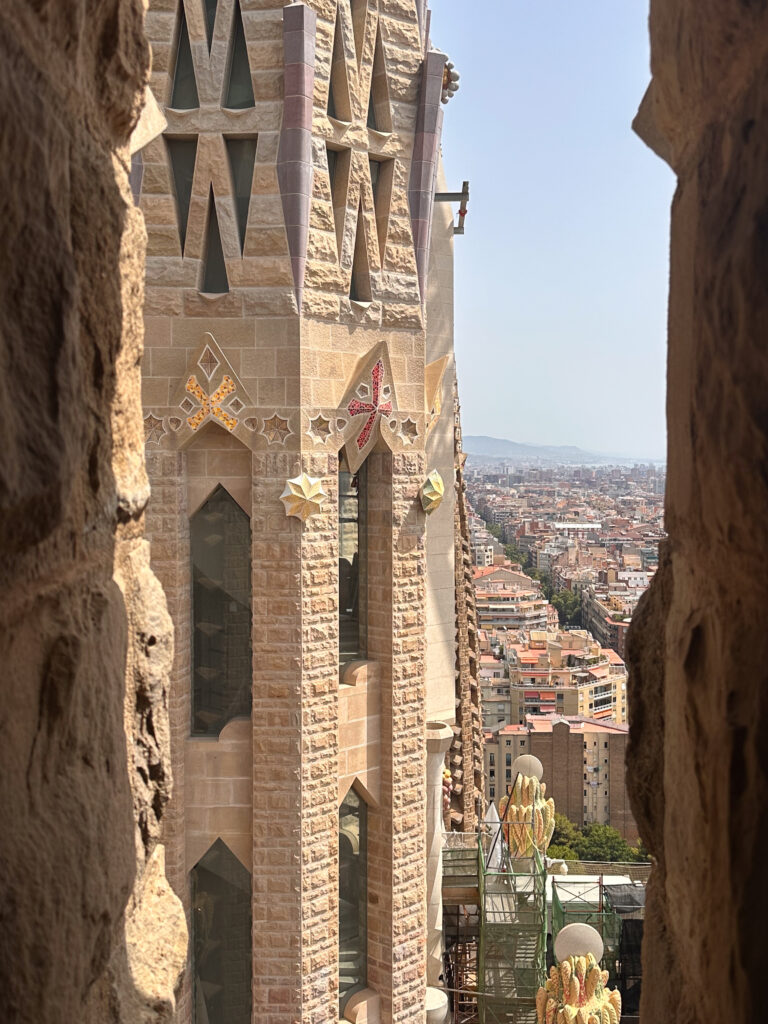
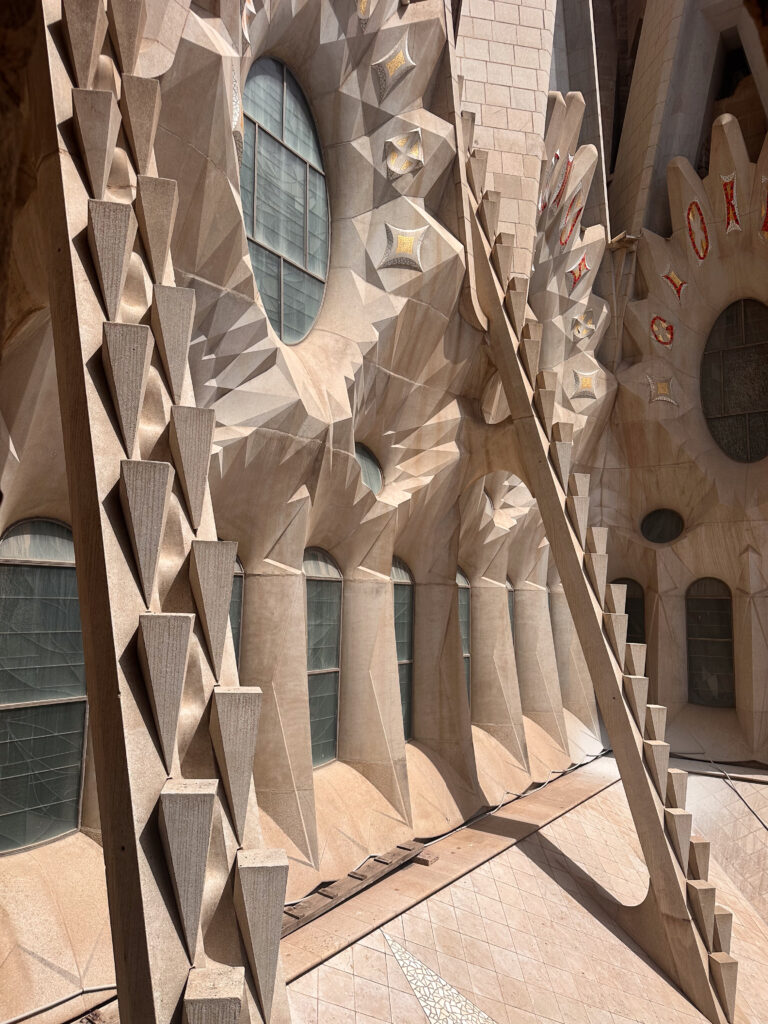
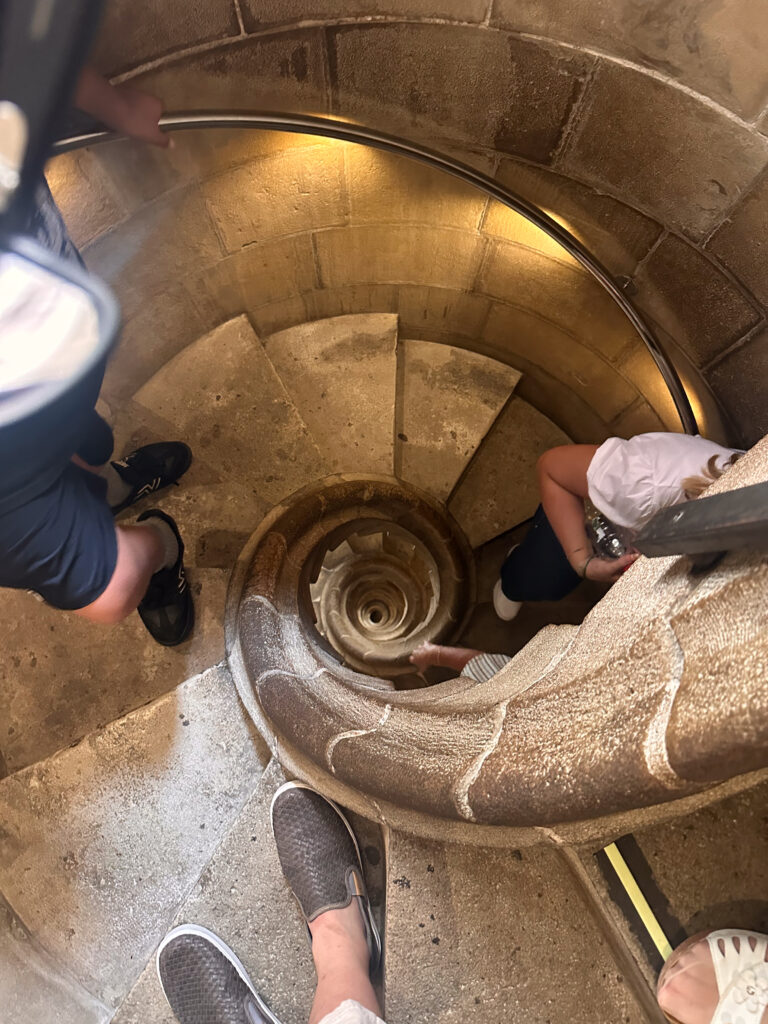
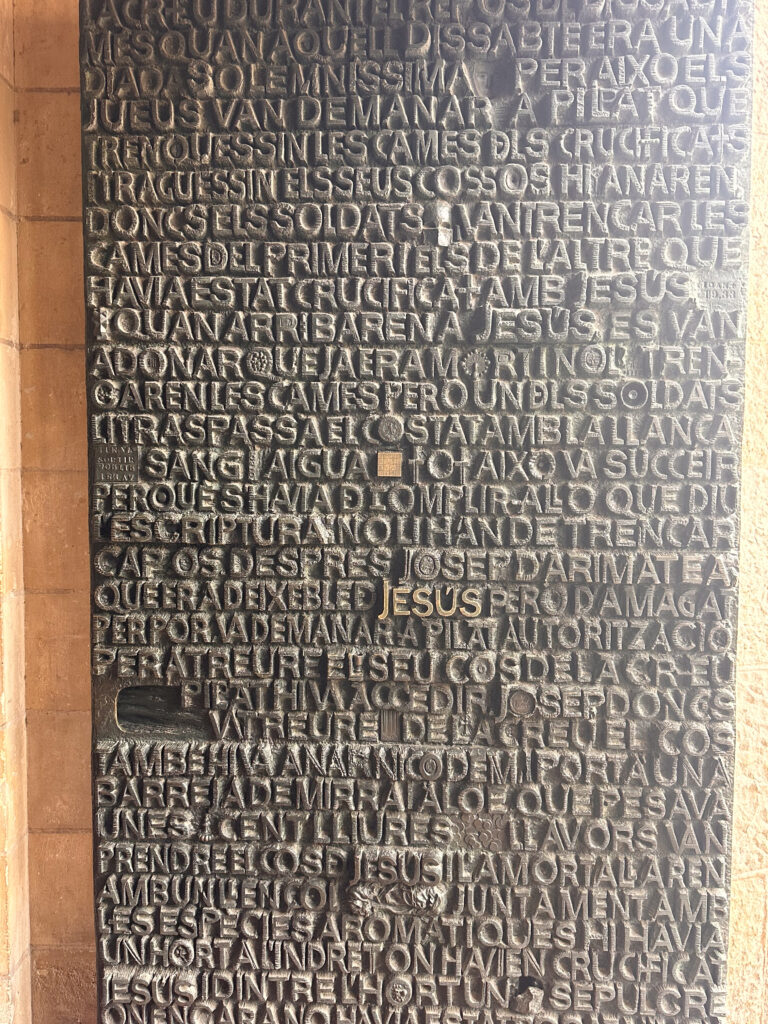
The exterior tells much of the Christian story through three monumental façades. The richly detailed Nativity Façade celebrates the birth and early life of Jesus, while the stark and angular Passion Façade depicts his suffering and crucifixion. A third—the Glory Façade—represents humanity’s journey toward God and serves as the basilica’s principal entrance.
The Sagrada Família is also remarkable because it represents a work of architecture spanning generations. Gaudí knew he would never see it completed, once famously observing that his client—God—was in no hurry. After his death in 1926, other architects and craftspeople continued the project using the plans, models and ideas he left behind.
The Magic Fountain of Montjuïc (Font Màgica)
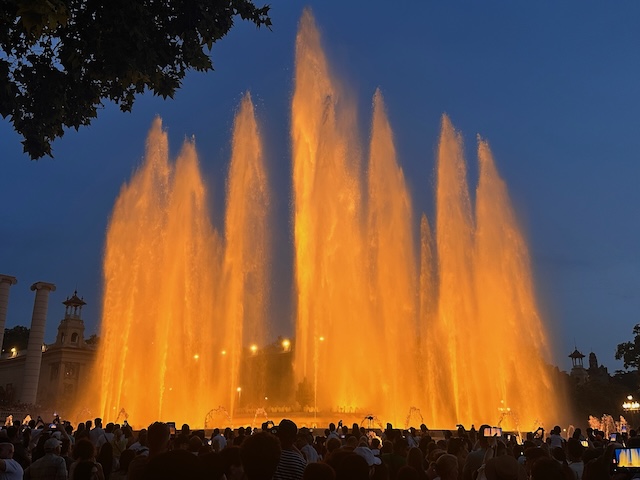
After resting up in our apartment for a bit, we ventured out to visit the Magic Fountain of Montjuïc. This fountain was created in 1929 for the Barcelona International Exposition (World Fair). It is a giant display of water and lights that are choreographed with music that sits in front of the Palau Nacional (home to the National Art Museum of Catalonia). Free shows are put on each evening and the venue is packed!
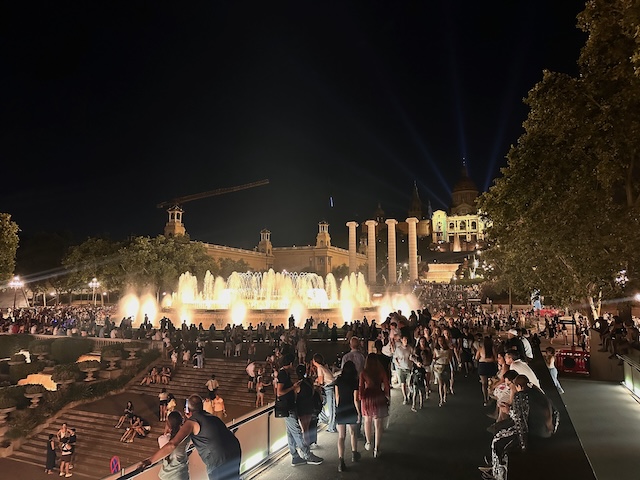
We watched back to back 30 minute shows, which seemed to blend together. Each show was synchronized with themed music (which was pretty cool). The kids found optimal places to sit on top of walls to get clear views over the crowds of people, though the crowds were not bad.
Leave a Reply
You must be logged in to post a comment.