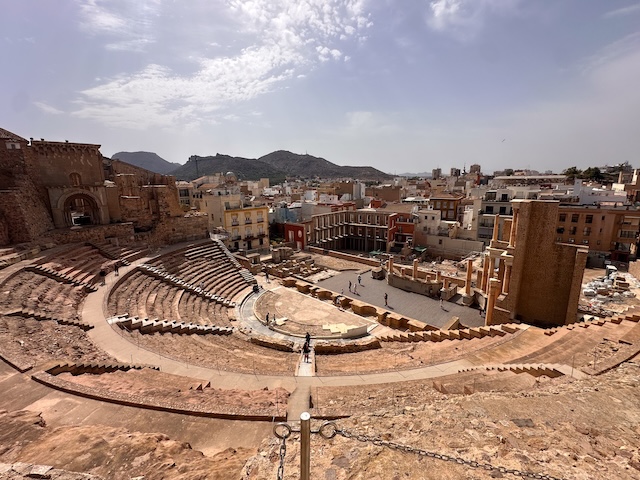
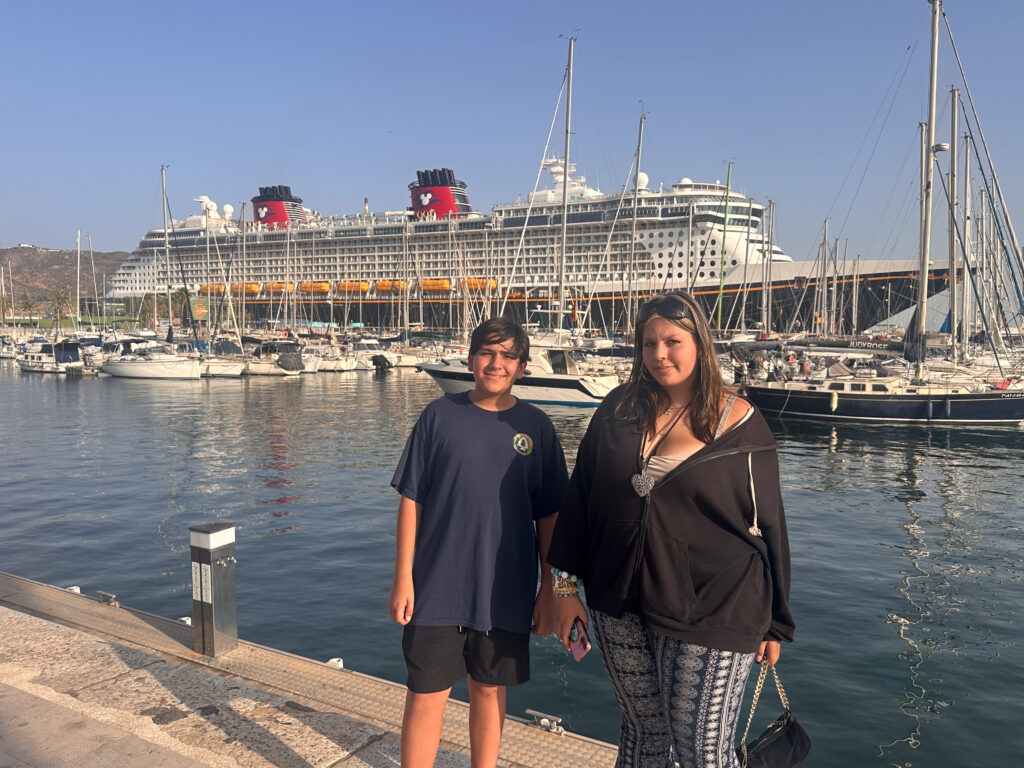
Our first port aboard the Disney Dream was Cartagena, a Spanish city whose history is inseparable from its protected Mediterranean harbor.
Sailing to Cartagena
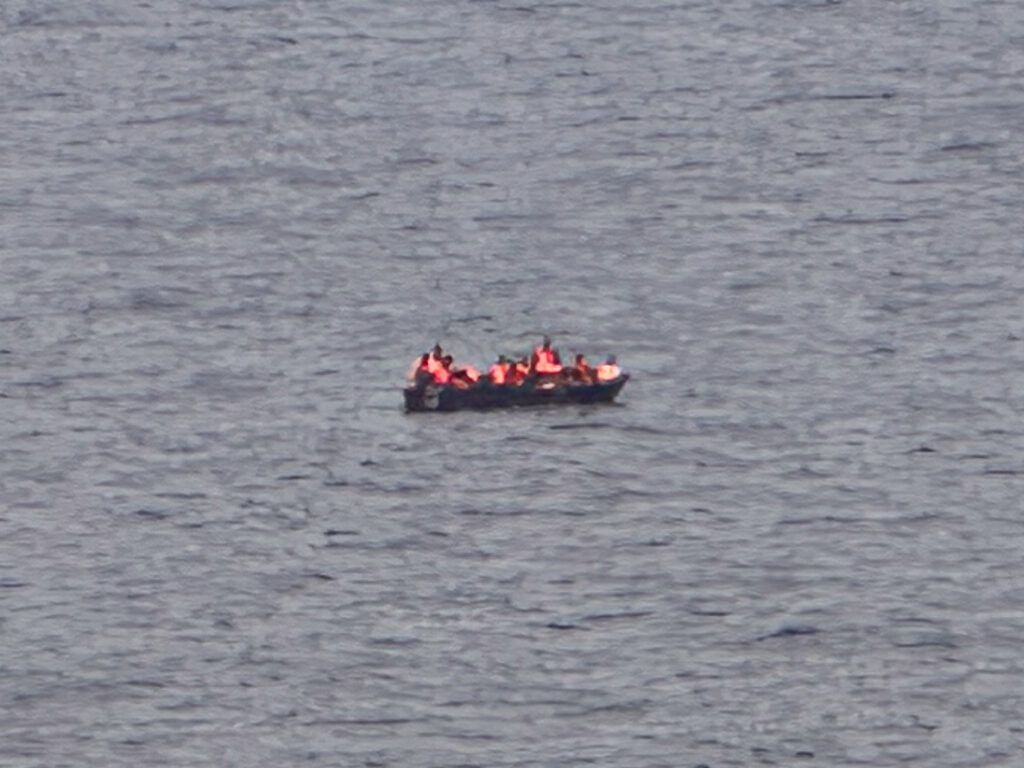
The morning of July 21st, on our way to the port of Cartagena, we had an unexpected delay. Our ship came upon what appeared to be a life boat with about 10 people. We learned that this was likely a boat of African refugees, possibly from Morocco, heading to Spain. The captain of our ship, the Disney Dream, following the International Convention for the Safety of Life at Sea (SOLAS), stopped our passage to ensure the boat and its passengers were safe while contacting Spanish authorities. The captain provided periodic updates to the ship’s passengers (who were asking questions and wondering what was going to happen), and then we resumed our voyage once we saw the Spanish authorities enroute.
Layers of History
Cartagena is one of those places where the modern city has literally been built on top of the civilizations that came before it. Carthaginians, Romans, Byzantines, Muslims and later Christian kingdoms all left their marks here, making the city something of an archaeological layer cake.
The centerpiece of our walking tour was the magnificent Roman Theatre of Cartagena. Built during the reign of Emperor Augustus in the first century BC, it could accommodate thousands of spectators and once stood in the Roman city of Carthago Nova. Amazingly, the theatre disappeared from view as later generations simply built over it. A commercial district occupied the site in late antiquity, followed by Byzantine structures, Islamic-era buildings and eventually the medieval city. Its rediscovery in the late 20th century became one of Cartagena’s most important archaeological finds.
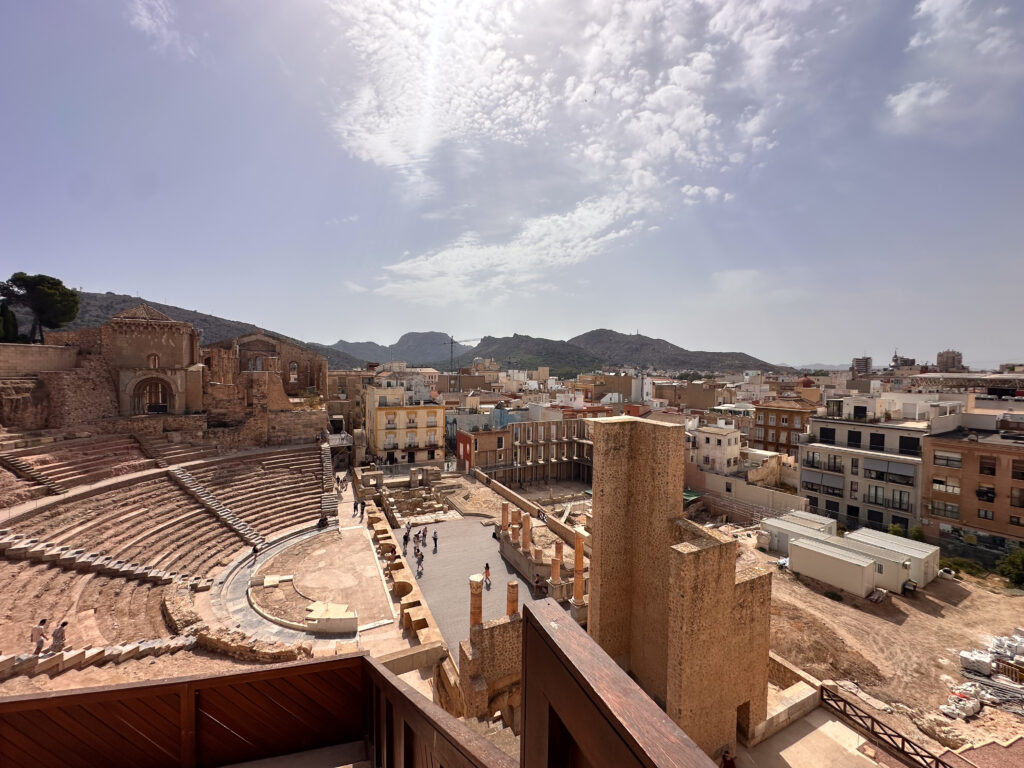
That makes walking through the site especially interesting: you aren’t merely looking at a Roman ruin. You are seeing multiple eras of Cartagena occupying essentially the same piece of ground.
The harbor provides the other half of Cartagena’s story. Its sheltered location made the city valuable as a military and commercial port for centuries, and it remains an important naval city today. Seeing Cartagena from the water during our boat tour helped put that history into perspective. The hills surrounding the harbor suddenly make its strategic importance obvious: ships could enter a protected anchorage while the heights above could be fortified and defended.
For us, Cartagena was a great first cruise stop because it introduced a theme that would continue throughout the vacation: in Europe, history often isn’t contained inside a museum. The modern city simply grows around it.